Quiet talent
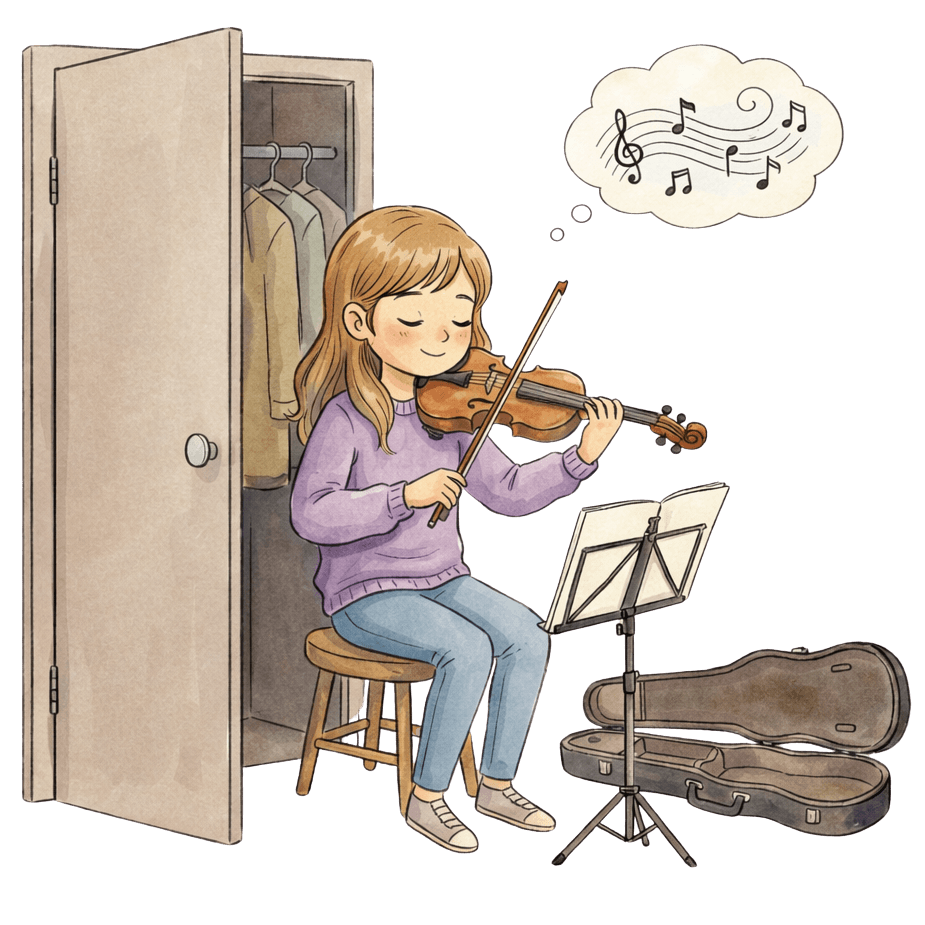
Is there something you do when no one is watching? Something you never really talk about. Something you do for yourself, or for a few people close to you, without ever considering it “real work”.
Have you ever wondered why you keep it behind the curtain?
The talent we treat as “nothing special”
I’ve noticed this pattern in many people, often without them being fully aware of it. They tend to see what they do as “nothing special”, as something that isn’t quite enough to build a job around or to charge for. And yet, they all seem to share a few things in common: a quiet spark in their eyes when they talk about it, a tendency to offer it freely simply because it’s something they genuinely enjoy doing, and an almost constant presence of someone around them who needs exactly that kind of help. Over time, that means their skill ends up serving only themselves, or a small circle of friends and family, while they remain completely unaware of how many people would need that skill exactly as it is.
I usually notice it through a random conversation. A topic comes up, and it quickly becomes clear how deeply they know it. They talk about every detail, every nuance, every way it could be done better. They can easily point out poor work in the same field and are often genuinely confused by how someone can charge for such a low-quality service. At some point, I usually find myself daring to suggest the obvious: what if they offered this to people outside their inner circle, not just to friends, but to anyone who might need it?
That’s when the conversation shifts. The first reaction is rarely curiosity. It’s defense. “No one needs this.” “I don’t know enough to charge for it.” “There’s still so much missing.” “Who would even want this as it is?” Then the comparison begins. They measure themselves against the very best in the field and list everything they don’t have yet, everything that still needs work, everything they believe disqualifies them from starting. And almost always, it comes down to the same fear: what if someone asks me to do something I don’t know how to do?
That question alone is often enough to stop everything, as if the possibility of not being able to do five percent of the work invalidates the ninety-five percent they could do with ease.
As the conversation continues, something softens. We start walking through real scenarios, looking at what they could offer now, what could wait, and who this would actually make sense for. I ask questions, not to push, but to understand, and piece by piece the fog begins to lift. The more concrete it becomes, the more visible that quiet spark is. Even while fear is still present, it’s clear that what they want, more than anything, is to do exactly this. To explore it. To try. To see where it could lead.
But there’s always hesitation beneath the excitement. Not because they don’t believe in the work, but because they don’t want to carry it alone. They want reassurance. Someone to say it’s okay to start imperfectly, okay to learn in motion, okay to not have everything figured out from the beginning. Without that sense of support, the desire stays contained. So the talent remains close, protected by self-criticism rather than shared with confidence.
Why we hide what we love
When something is truly yours, criticism doesn’t land as neutral feedback. It feels personal, almost intimate. The work isn’t separate from you; it’s tied to identity, to self-worth, to the part of you that cares deeply. That’s why the idea of offering it to others can feel so exposed. It’s not just your work that might be judged — it’s you.
This is where fear quietly enters. Fear of being judged before you feel ready. Fear of disappointing someone who trusted you. For people who care deeply about what they do, these fears don’t stay abstract. They settle in the body and begin to shape decisions.
Perfectionism often grows out of that space, not as ambition, but as protection. Wanting things to be “good enough” becomes a way to stay safe. If it’s not perfect yet, you don’t have to show it. If there’s still more to learn, you don’t have to risk letting anyone down. What looks like high standards is often fear wearing a more acceptable face.
Over time, this kind of self-protection turns into a pattern. Waiting for more confidence. More certainty. More validation. And slowly, without noticing, safety turns into invisibility. Not because the talent isn’t strong enough, but because staying hidden feels less painful than risking imperfection out loud.
Why the world can’t find what isn’t shown
Think about how often you’ve searched for someone to help you with something specific and couldn’t find the right fit. Not because you were looking for the best of the best, but because you wanted someone who would actually care. Someone who wouldn’t overcharge. Someone who would enjoy doing the work. Maybe you needed a band for a birthday, not a polished concert act, just people who could hold the atmosphere. Or maybe you were looking for a dress for a friend’s wedding and wanted something unique, made by someone at the beginning of their journey, someone whose work still carries that personal touch.
Quiet talent often waits to be discovered. It hopes someone else will notice, invite, validate. But how can the world find something that isn’t shown? Think about how many people you know who spend their lives doing work they don’t enjoy, while carrying something else inside them. Something they would love to build, explore, offer with presence and quality. Not because it’s perfect, but because it matters to them.
What you know now is already enough to begin
What if offering your talent didn’t mean promising everything? What if it simply meant offering what you already know how to do, exactly as it is now, and letting growth happen in motion? You don’t need to meet the standards of the very best in your field. You don’t need to be ready for every possible request. You don’t need to protect yourself from every unknown. You only need to be honest about where you are. Somewhere out there, someone doesn’t need perfection. They need your version.
Don’t wait for the perfect moment
A quiet talent doesn’t disappear. It waits, protected by careful thinking and good intentions. We call it patience, preparation, realism. But beneath it often lives fear, the kind everyone feels before taking a first step.
Starting is simply a decision, a willingness to be seen before everything feels fully ready.