Dopamine escape
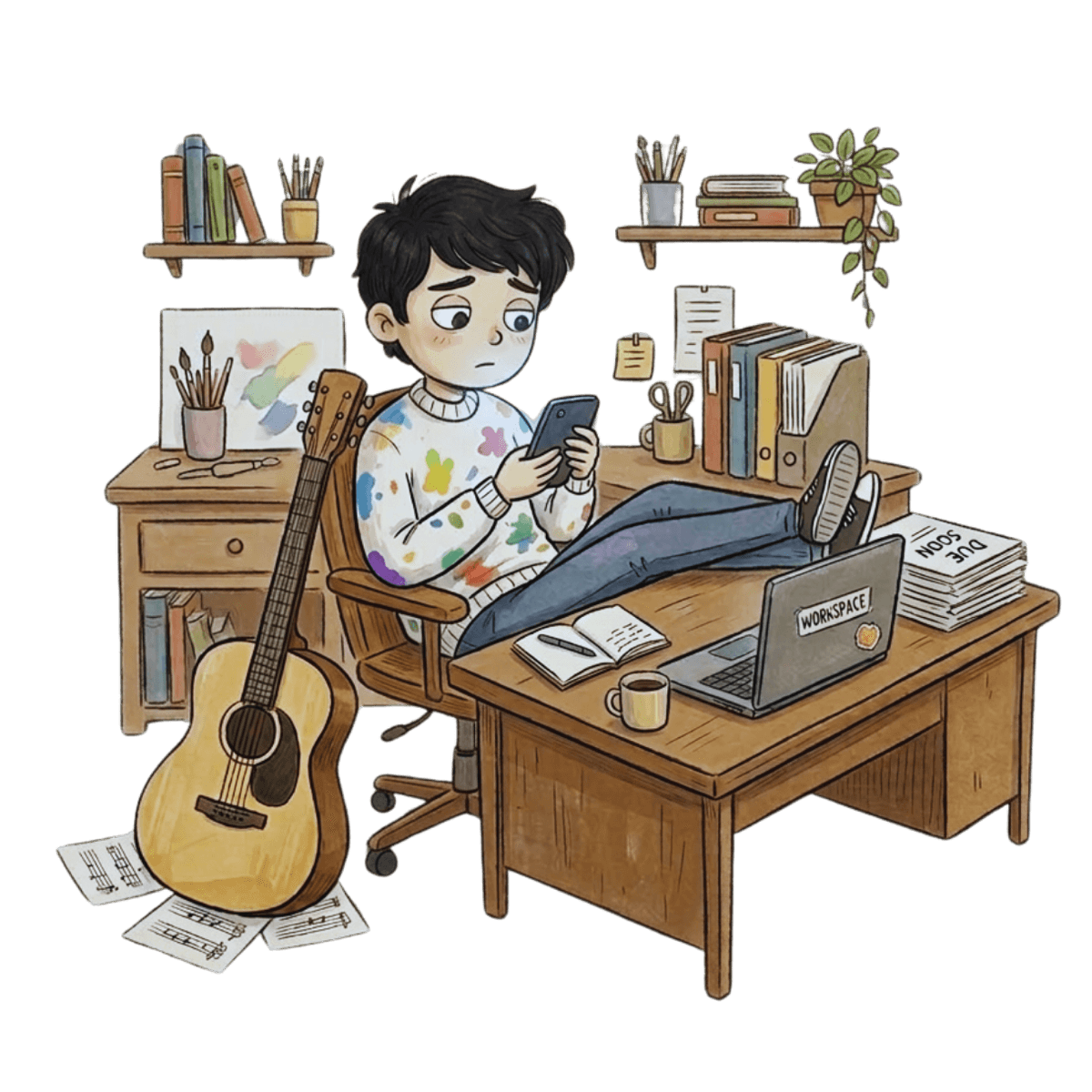
Have you ever told yourself, “Just five minutes”? Just five minutes of scrolling, one short video, one quick game to reset, one more episode… and then, at some point, you realize it’s been hours.
How do we lose track of time so easily, and why do we start with those “five‑minute” activities in the first place?
Urge for a quick mental reset
Sometimes all you want is a small reset. Just a few minutes where you can step away from something that requires you to think, decide, or feel. Maybe it is a task that feels too big. Maybe it is an open question without a clear answer. Maybe it is a conversation you do not want to replay in your head again. And somewhere inside, a simple sentence appears: I don’t want to think about this right now.
There is a slight tightening in the body, a subtle restlessness, a sense that returning to what is in front of you would require more energy than you currently have, so you reach for something easier to hold.
You open your phone. You scroll. You check something you have already checked. You play a quick game. You watch one short video and then another. You reorganise something small. You research instead of deciding. You move your attention away from the place where things feel unfinished.
What makes this shift powerful is not the content itself. It is the change in experience. The world suddenly becomes simpler. There is a clear next move: swipe, click, level complete, refresh. The rules are obvious and the feedback is immediate. Nothing demands emotional depth or long‑term thinking, and for a while that simplicity feels relieving. Your attention narrows, the internal noise softens, and the complexity of your own life moves to the background. You are occupied, stimulated, engaged just enough.
And then, without really noticing, time passes. When you finally pause, the original task and the unresolved feeling are still there. The escape was brief and the relief was real, but now there is also a subtle layer of fatigue and you feel slightly more drained than before.
Shortcut to stress relief
When something feels uncomfortable, your brain does not ask whether you should grow. It asks how to feel better, fast. Discomfort can look like boredom, uncertainty, or the feeling that you do not know where to start. It can feel like being behind, not being good enough, or carrying the weight of an unfinished task. It can also be grief, shame, or fear.
In those moments, dopamine becomes a regulation tool. When you scroll, switch apps, check notifications, play a quick game, or reach for another quick source of stimulation, you are not searching for happiness. You are trying to lower internal tension. Dopamine shifts your attention outward and narrows your focus to something simple and immediate: a swipe, a click, a small reward.
The mind prefers what is clear and structured over what is ambiguous and emotionally demanding. So instead of sitting with discomfort, it redirects you toward stimulation. That is the psychological function of this escape. It is not about pleasure. It is about relief, and relief becomes powerful when something inside feels hard to face.
Vicious cycle of stimulation and fatigue
The problem begins when fast rewards become the primary regulation strategy. When you repeatedly expose your brain to small, rapid bursts of stimulation, it adapts. Baseline dopamine levels decrease, and ordinary activities start to feel flat in comparison. Over time you start needing more novelty, more intensity, more input just to feel normal. That is when thoughts like these appear: “I can’t start”, “nothing feels interesting”, “I need something stronger”. Many people interpret this as laziness or lack of discipline. In reality, the nervous system is overstimulated.
After extended scrolling or gaming, focus becomes harder, motivation drops, and mental fatigue increases. What felt like a reset ends up amplifying exhaustion. You return to your tasks with less energy than before, which makes escape even more tempting. Even if you were lying down the whole time, your nervous system was not resting. It was processing micro‑surprises, micro‑decisions, and micro‑emotional reactions. Your brain was working continuously. This is why you often feel more tired, not less.
Relief slowly turns into exhaustion, and that exhaustion increases the urge for more relief. In more extreme cases, this cycle can grow into addiction, but long before that point many people are already caught in the same loop on a smaller, everyday scale.
Dopamine is not the problem, the way we use it is
Not all dopamine spikes are harmful. Exercise, meaningful work, learning, creating, building something that matters, even falling in love all raise dopamine in a way that supports growth and engagement. The difference is not the chemical, it is the direction.
Dopamine becomes a problem when it replaces processing. Introspection requires slowing down, tolerating discomfort, and staying with uncertainty long enough for clarity to form. It takes energy and capacity. Dopamine is easier. It offers an instant reward, an instant shift in state, and immediate distraction from what feels heavy. The brain will often choose what is faster and more energy‑efficient, not because you are weak, but because it costs less.
If you repeatedly choose dopamine escapes instead of facing what is actually bothering you, the original issue remains exactly where it was, quietly waiting in the background. And because you keep postponing it, guilt slowly joins the cycle.
Pause before escaping from yourself
The solution isn’t stricter discipline. It’s awareness. Before you reach for your phone or another distraction, pause and ask yourself: What am I trying not to feel right now? Am I overwhelmed? Am I uncomfortable? Am I avoiding starting because I want it to be perfect?
Here’s a fun fact about dopamine. It is released more in anticipation than in the reward itself. Planning a trip often feels more exciting than the trip. Refreshing your inbox can feel more stimulating than actually reading the email.
The same happens with your work. Imagining success feels better than doing the slow, repetitive work that leads to it. That first idea about your project probably gave you a rush. It felt exciting. Full of possibility. But real progress doesn’t feel like that rush. It feels steady. Sometimes boring. Sometimes hard. And there will be moments when you want to escape.
So the next time your work feels heavy or dull, remember this: when you escape into instant dopamine, you are moving further away from the very thing that once gave you that first hit.