Different perspectives
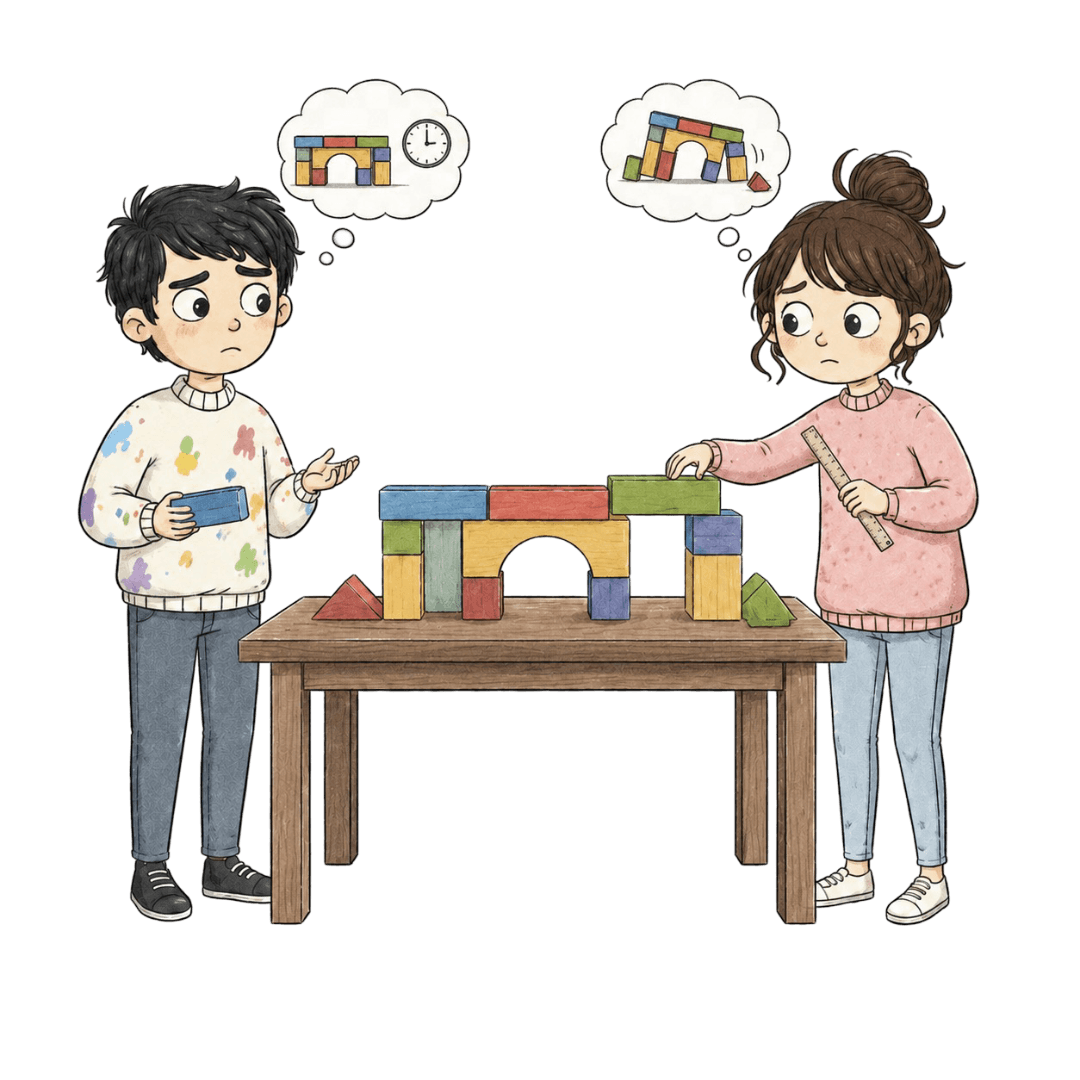
How often do you get frustrated when a colleague does something differently from how you would do it?
Maybe they finish a task later than you expected, or later than you think was necessary. Maybe they make a decision without involving you, leaving you feeling excluded from the process. Maybe they ask for help sooner than you think is necessary.
Or perhaps it is the exact opposite that frustrates you.
Different definitions that lead us into conflict
In situations like these, thoughts such as “How can you not see it?” or “Isn’t it obvious?” can quickly come to mind. And while you are wondering how someone could possibly think their approach makes more sense, they may be wondering the same thing about yours. Both sides hold on to their own view, and a difference in how something should be done can easily turn into a conflict over who is right. Sometimes, we even look for people who see it the way we do, as if their agreement proves that our view is the right one.
Take responsibility, for example. For one person, being responsible means finishing a task quickly enough that no one else has to wait. When a colleague continues checking the same work, they may see unnecessary delay and wonder why that person cannot simply make a decision. For someone else, responsibility means making sure the work is correct before it reaches other people. When a colleague finishes quickly, they may see carelessness and wonder why that person did not take more time to consider what could go wrong.
Both people may describe themselves as responsible while questioning the responsibility of the other. They use the same word, but they do not look for the same behavior as proof of it. The same can apply to many other qualities we use to describe ourselves and others. Our definitions are not always the same.
But what if both views make sense? And what if they are not the only ones?
Why do we believe our way is the right one?
Our definitions are not formed in the moment when we judge someone’s behavior. They have been shaped over time by the environments in which we grew up and worked, the behavior we saw being rewarded and the consequences we learned to pay attention to. Someone who has seen small mistakes create serious problems may connect responsibility with careful checking. Someone who has often experienced delays caused by indecision may connect it with acting on time.
These experiences influence which part of a situation we notice first. One person sees the time being lost, while another sees the mistake that could be made by rushing. Because each person is responding to something real, their own perspective does not feel like one possible interpretation. It feels like an accurate description of what is happening. And these are not the only two possible perspectives. Different experiences, priorities and information can lead people to see many different parts of the same situation. We tend to notice two at a time because conflict makes the contrast between them visible.
Social psychologists call this tendency naive realism. We tend to experience our own view as objective and expect other reasonable people, when given the same information, to see the situation in a similar way. When they do not, it becomes easy to assume that they are missing something, thinking irrationally or allowing their own bias to affect their judgment.
When someone’s behavior does not match our idea of how something should be done, we may stop seeing it as a different approach and start treating it as evidence of what kind of person they are. Someone who takes more time becomes indecisive. Someone who acts quickly becomes careless. Someone who asks for help sooner than we would becomes incapable of working independently.
Those descriptions may sometimes be accurate. But doing something differently from us is not enough reason to turn that difference into a label.
What if our different perspectives could make us stronger together?
Before turning a difference into a label, what if we separated what happened from what we concluded about it? A task took longer than we expected. That is what we observed. Deciding that the person is irresponsible is our interpretation of what that delay means, and it may not be the only possible one.
What might change if, instead, we became curious about what the other person sees? What are they trying to prevent with their approach? What are they noticing that we may be overlooking? Maybe a small part of what they see is exactly what we need to get unstuck.
Understanding another person’s approach does not take away our own way of solving a problem. It allows both people to see more. And once we understand what each person brings, we may find an even better way to reach the same goal. We may divide the responsibility so that each person can use their strengths, or discover the situations in which the other person is exactly the one we can rely on or turn to for help.
Who knows what we might discover, and how we could both improve, if we became curious about the difference before turning it into a label?
Choose your reaction
Whether at work or in another area of your life, you will probably feel this frustration again. But the next time it appears, you can consciously choose how to respond.
You can keep fighting to prove that your way is the right one because, after all, isn’t it obvious?
Or you can choose curiosity and explore what might be obvious from where they stand.